THE SHORT ANSWER
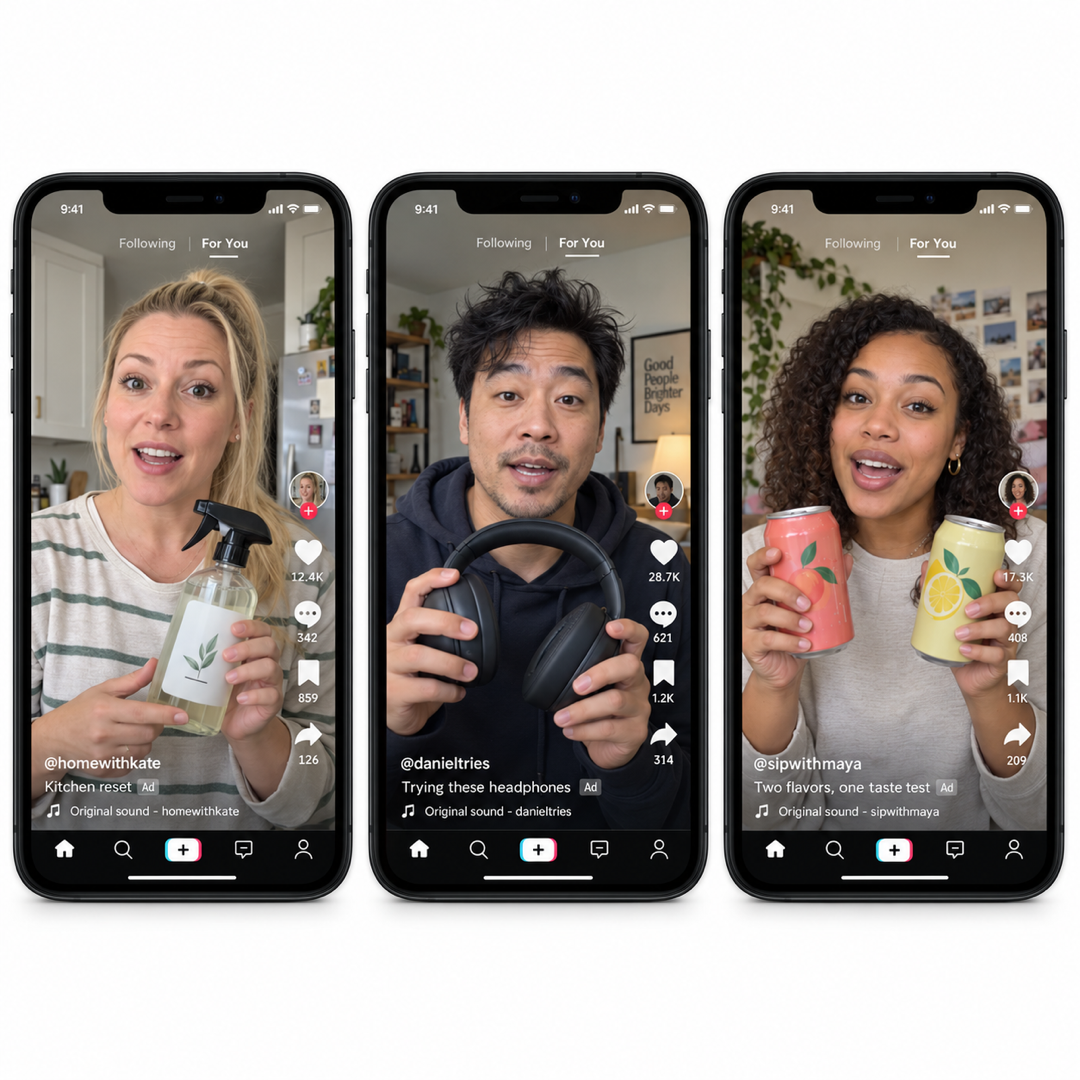
UGC stands for user-generated content, and in the context of buying content for your brand, it means working with creators to produce photos and videos that feature your products in a personal, relatable way. You provide payment, an agreed exchange of product, or a combination of both, and the creator produces content your brand can use on its own social channels or in paid advertising, depending on the agreement.
The term also describes content customers share independently, such as a photo of a recent purchase or an unsolicited product review. When we talk about UGC at Scout Made, we mean commissioned creator content: work planned around your brand’s goals, made by selected creators, and delivered with clear expectations for how you can use it.
Why brands invest in UGC
UGC gives brands an opportunity to bring a more human connection into their marketing. A creator can show how a product fits into their routine, explain something a customer might be wondering about, or demonstrate it in a setting that feels familiar. That personal perspective helps people picture the product in their own lives and gives them something more specific to connect with than a list of features.
For a growing brand, it can be tempting to equate legitimacy with perfect lighting, elaborate production, and polished product shots. But a useful demonstration or a natural conversation with the camera can also make a product feel credible and approachable. A person explaining why a particular bag works for their daily commute, for example, can make its pockets, size, and design feel relevant in a way that a product photograph alone may not.
At Scout Made, we see that as an opportunity to bring trust back into the advertising equation. The goal is to create content that feels personal because the creator, the product, and the story fit together. That takes thoughtful selection and a clear brief, along with enough room for the creator’s own personality to come through.
How UGC differs from an influencer partnership
The main distinction is what your brand is paying for. In a UGC arrangement, you commission a creator to make content for your brand to use. An influencer partnership includes publication to the creator’s own audience as part of the agreement. For a UGC campaign, that means you can select someone for their ability to tell your story and connect with your intended customer without requiring them to have a large following.
Your brand then distributes the finished content through its own channels or puts advertising spend behind it, within the agreed usage terms. The creator’s follower count therefore doesn’t set the ceiling for how many people can see the content. When planning the campaign, the more useful starting point is whether that person can make something relevant and engaging for the audience you want to reach.
What your brand actually receives
A UGC campaign turns a marketing need into a defined set of creator-made assets. Those might be videos demonstrating how a product works, photos showing it in use, or direct-to-camera explanations built around a particular customer question. The deliverables depend on the campaign: what you want to communicate, where you intend to publish, and what formats you need.
Creators may receive a fee, an agreed exchange of product, or both. In each case, the relationship needs clear expectations about what they will create and what your brand will receive. An agreed product-for-content exchange is different from simply mailing someone a product and hoping they post about it.
At Scout Made, the work includes defining that campaign, scouting suitable creators, coordinating the agreements, and managing the process through delivery of the assets. Before filming begins, the brand and creator should understand the scope, compensation, product arrangements, timeline, included edits, and any posting expectations. Those decisions give everyone a shared understanding of the work and help the finished content serve its intended purpose.
The agreement also establishes how your brand can use the content and the creator’s image and voice. If you want videos for organic social posts and paid advertising, both uses should be addressed, along with how long those permissions last. Receiving the files and holding permission to use them are related but distinct parts of the purchase; licensing makes the intended uses explicit. U.S. Copyright Office guidance
What makes a creator the right fit?
The right creator depends on both the brand and the individual campaign. Someone who is thoughtful and measured may be well suited to a detailed product explanation, while a bubbly, expressive personality may bring the energy another concept needs. Their ability to speak naturally to camera, demonstrate the product, and communicate in a way your customers recognize matters more than choosing someone simply because they make attractive videos.
Lifestyle can be just as relevant. A pet product may need a creator who can show it with their own dog, while a home product may need a particular space or daily routine to make the demonstration useful. These details shape who we scout and how we evaluate the fit. Starting with the story you want to tell makes it easier to find people who can tell it naturally.
A good brief gives those creators direction without removing everything that makes their contribution personal. The brand brings its goals, product information, and intended message; the creator brings their delivery, surroundings, and perspective. That combination is what gives commissioned UGC its value.
A personal approach to brand content
UGC can be planned and paid for while still reflecting a creator’s real experience and personality. That honesty matters to the connection you’re trying to build: personal endorsements should reflect actual experience, and relevant relationships with the brand should be disclosed clearly. FTC guidance on endorsements and disclosures
For brands, the practical benefit is a collection of content that helps people see the product through a human perspective, with an agreed plan for putting it to work. Choosing the right creators and giving them a clear story to tell makes that process more purposeful from the start.
Planning a UGC campaign? Tell Scout Made about your brand and what you need through our contact form. Select a campaign engagement, and we’ll follow up by email to arrange a conversation.